By Paul Heidebrecht
The short answer to this questions is: Lots of people! One of the points of this blog is to highlight various news items and events that demonstrate the growing interest in reflecting critically on technology, and in applying technology to peacebuilding. And each week my struggle isn鈥檛 to find things to share, it is to decide what to prioritize.

For example, an article in The Guardian last week drew attention to the , while today鈥檚 New York Times discussed growing dissent among Facebook employees over the social media giant鈥檚
Of course, I realize that not everyone thinks that ethics and social impact should be front and centre when it comes to innovation and technology.
One case in point can be found in a Bloomberg Businessweek profile of Andruril, a start-up founded by former Facebook employee Palmer Luckey who is eager to tell job candidates: Perhaps it鈥檚 more charitable to say that others interpret the word 鈥渞esponsible鈥� differently than I do! Regardless, I was disappointed to see The Globe and Mail report that Microsoft鈥攁 leading voice in discussions around AI and ethics鈥攂eat out Amazon to secure a .
These are the kinds of stories that were swirling in my mind last Wednesday when I attended Summit for Responsible Innovation and Technology at the University of 蓝莓视频. This one-day event was organized by 蓝莓视频鈥檚 recently formed Council for Responsible Innovation and Technology (of which I am a member) in order to engage faculty, staff, and students. The council aims to promote responsible research and teaching that actively attends to critical social and ethical issues embedded in the research, design, and application of technology, and, as evident in the six 鈥渓ightning talks鈥� from 蓝莓视频 faculty (and one student), we have some great exemplars on our campus.
But the point of the day was to listen and learn more than to disseminate information or prescribe actions. Indeed, our council鈥檚 efforts to transform the innovation culture at 蓝莓视频 and beyond will require the consideration of diverse views and the contributions of many.
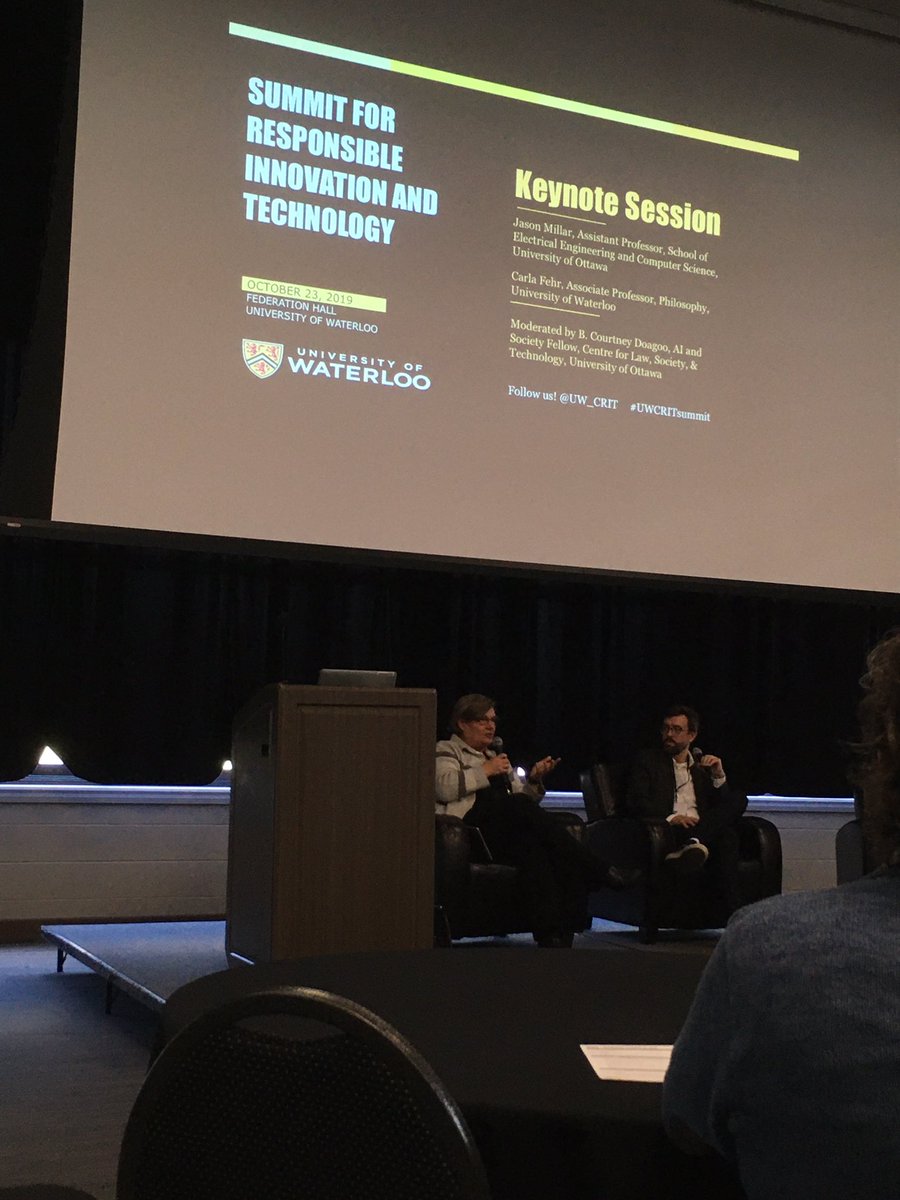 Thus I was pleased with the way that the opening keynote speakers, philosophers from the University of Ottawa and 蓝莓视频鈥檚 own Carla Fehr, established an appropriate tone for the day by reflecting on approaches they have found helpful when engaging students and colleagues across disciplinary silos.
Their presentations sparked interesting and even, at least in my case, somewhat contentious table conversations鈥攊t turns out that economists, engineers, environmental scientists, philosophers, and peacebuilders have strikingly different assumptions about what constitutes good or responsible innovation! The summit provided a rare opportunity to encounter these perspectives, and to be reminded of how much of a challenge it is to refocus or redirect the development of new technology. It was also striking to see how many attendees were already straddling multiple disciplines in their research and teaching.
Thanks to the facilitation Kathryn Plaisance, a faculty member in Knowledge Integration, the afternoon breakout sessions and town hall generated lots of concrete suggestions for how 蓝莓视频 can build on these conversations. Watch for more opportunities to get involved in the coming months!